Why Every Outdoor Brand Needs a Dedicated SEO Strategy
Most outdoor brands are sitting on a goldmine of organic search potential and leaving almost all of it untouched. Not because they're not trying, but because outdoor industry SEO is genuinely different from what most agencies are built to handle. The seasonality is real, the customer intent is layered, and the content that actually converts looks nothing like what a generic B2B or local service playbook would suggest.
If you've ever worked with a large agency and felt like you were getting recycled strategy dressed up with your brand name on it, this is for you.
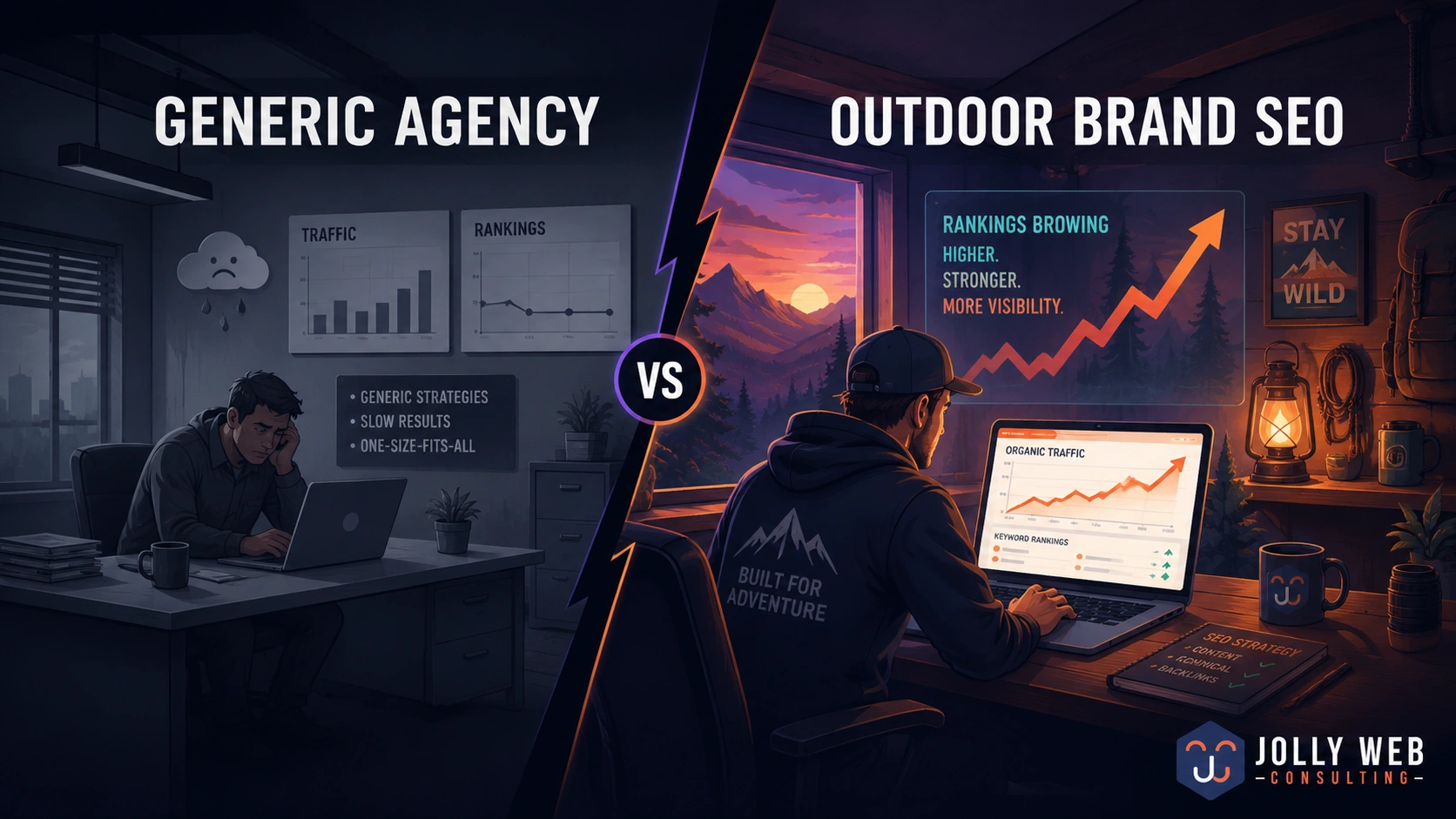
Why Generic Agencies Miss the Mark for Outdoor Brands
A typical SEO agency thinks about keywords as a fairly flat exercise: find what people search for, create content around it, build some links, watch rankings climb. That approach works reasonably well in a lot of industries. Outdoor is not most industries.
Outdoor brands operate in a world where search intent shifts dramatically across months, product categories, and audience segments. Someone searching "best hiking boots" in March is probably researching for a spring trip. That same person searching in October might be looking for waterproof options for late-season use or comparing end-of-season deals. The keyword looks the same. The intent is completely different. If your content strategy doesn't account for that, you're optimizing for clicks and missing the sale.
Generic agencies also tend to underestimate the role of gear culture, trail community, and lifestyle identity in how outdoor audiences actually buy. People in this space don't just want specs. They want to know that a brand understands their world. Content that reads like it was written by someone who has never clipped into a binding or loaded a backpacking stove is going to underperform, full stop.
The Seasonality Problem Nobody Talks About Enough
Seasonality is one of the defining challenges in outdoor industry SEO, and it's one that generic strategies routinely mishandle in two ways: by ignoring it entirely or by reacting to it instead of planning for it.
Search rankings don't move overnight. A piece of content published in November is not going to rank for a high-volume keyword by December. That's just not how Google works. Outdoor brands need to be publishing, optimizing, and building authority four to six months ahead of their peak search windows, not scrambling when the season arrives.
This means your SEO calendar has to be built around your actual business calendar. If your biggest revenue window is May through August, your content production and link building should be in full swing from November through February. Most agencies building generic quarterly plans aren't thinking this way at all.
A well-structured outdoor SEO approach typically includes:
- Seasonal keyword mapping tied to real purchase timelines, not just monthly search volume
- Evergreen pillar content that captures consistent brand-level queries year-round
- Category and product page optimization aligned to peak demand windows
- Off-season content that builds authority and captures early-researcher intent
- Technical audits timed before major traffic surges, not after

What Niche SEO Expertise Actually Gets You
Let's put some numbers to this. Fit4Adventure, an outdoor adventure travel company, came to us with solid brand recognition but inconsistent organic traffic and almost no search visibility outside their branded terms. Their previous SEO work had been done by a generalist agency that treated their site like it could have been selling anything.
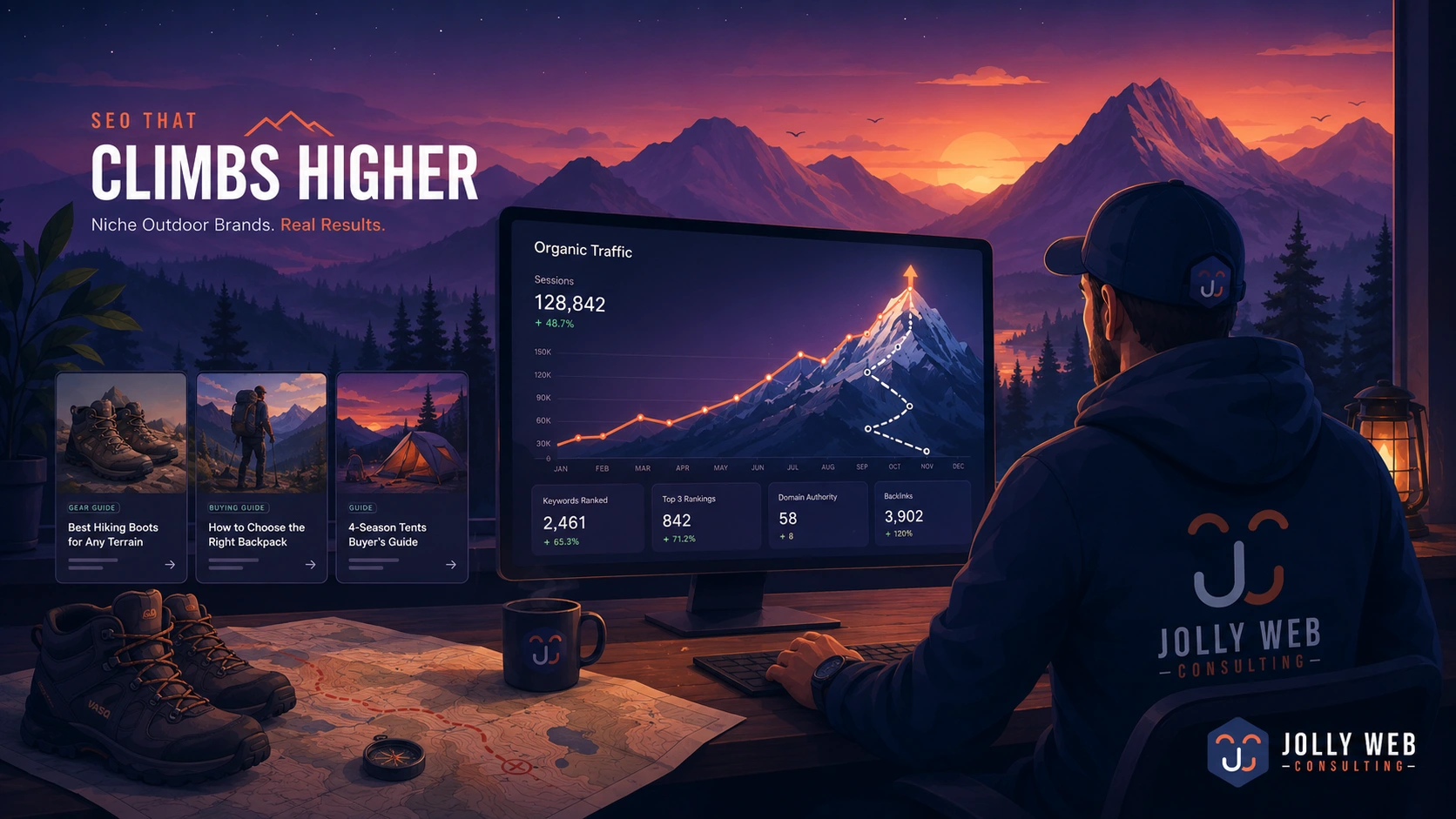
Within 14 months of implementing a dedicated outdoor industry SEO strategy built around their actual audience, their content pillars, and a carefully sequenced seasonal content plan, Fit4Adventure grew organic traffic by 250%. That growth wasn't driven by tricks or shortcuts. It came from finally having a strategy that understood what their customers were actually searching for at each stage of the planning and buying process, and creating content built to meet them there.
The difference between a generalist approach and a niche one often looks like this:
Search Intent in the Outdoor Space Is Multi-Layered
Outdoor customers often do a lot of research before they buy. That's not a barrier, it's an opportunity. If your brand is present and useful at the research stage, you're building trust long before someone hits the cart. That means your SEO strategy needs content that speaks to the dreamer, the planner, the gear-obsessed comparison shopper, and the ready-to-buy customer all at once.
The brands that win at outdoor industry SEO aren't just optimizing their product pages. They're building content ecosystems: destination guides, gear comparison pieces, how-to content, community-driven stories. That content earns links naturally, builds authority over time, and keeps pulling in qualified traffic month after month without additional ad spend.
This is the part most outdoor brands underinvest in, largely because it requires strategic thinking about content as a long-term asset rather than a one-time task. When you have a partner who understands the space, that investment starts making sense in a way it never does when you're getting generic advice.
If you're ready to build an SEO strategy that actually reflects how your audience shops and searches, take a look at our SEO services for modern brands.
Frequently Asked Questions About Outdoor Industry SEO
What makes SEO for outdoor brands different from general SEO?
Outdoor brands deal with strong seasonality, audience segments driven by lifestyle identity, and purchase journeys that often involve significant research before conversion. A strategy built for a SaaS company or a local service business simply doesn't account for those dynamics. Outdoor industry SEO requires keyword planning that maps to actual seasonal demand, content that speaks credibly to a gear-literate audience, and a production calendar that gets ahead of peak search windows rather than reacting to them.
How long does it take to see results from an outdoor SEO strategy?
Organic SEO is a medium-to-long-term investment. Most brands start seeing meaningful movement in rankings and traffic within four to six months, with more significant compounding growth visible at the twelve-month mark. For seasonal businesses, the timing of when you start matters a lot. Beginning your strategy well before your peak season is where most of the leverage lives.
Should outdoor brands focus more on product pages or content?
Both, but for different reasons. Product and category pages drive transactional traffic and need strong technical optimization and intent-matched copy. Blog and editorial content builds authority, captures early-stage researchers, earns backlinks, and keeps your brand visible in the months when direct purchase intent is lower. The most effective outdoor SEO strategies treat these as complementary, not competing.
Can a small outdoor brand compete with major retailers in search?
Yes, and often more effectively than people expect. Large retailers tend to dominate broad, high-volume keywords. Smaller brands can win on specificity: niche gear categories, destination-specific content, brand-story-driven queries, and long-tail searches from highly qualified buyers. That's actually where conversion rates tend to be highest anyway.
How does Jolly Web approach SEO for outdoor and adventure brands?
We build strategies from the ground up around your audience, your seasonality, and your actual business goals. That means a custom keyword framework, a seasonal content plan, technical optimization, and reporting that ties back to revenue. No recycled templates. Get in touch and we'll talk through what that looks like for your brand specifically.
The Right SEO Partner Changes the Game
Outdoor industry SEO done well is not a simple checklist. It's a living strategy that evolves with your seasons, your product launches, and the way search behavior shifts over time. The brands that grow consistently in organic search are the ones with a partner who understands their world well enough to stay ahead of it.
If your current SEO strategy feels generic, seasonal, or like it was built for someone else's business, it probably was. Let's fix that. Explore our SEO services or reach out to start a conversation about what a dedicated outdoor SEO strategy could look like for your brand.

Founder, Jolly Web Consulting
Jolly Web Consulting is a Boulder, CO-based digital marketing agency helping outdoor and premium brands grow through SEO, Webflow, Shopify, paid ads, and email marketing. Since 2010, Hayden has built accessible, high-performing websites focused on traffic, conversion, and long-term customer growth.


