Do You Need a Website Redesign? 10 Website Mistakes Costing You Leads in 2026
In Brief
If you're short on time, here's what matters most:
- A slow, outdated, or confusing website actively costs you customers and leads.
- Most website problems fall into predictable categories: speed, design, messaging, mobile, and trust.
- WordPress is more of a liability than an asset for most modern brands.
- Webflow and Shopify are the better platforms for performance, flexibility, and long-term growth.
- A website redesign is not just cosmetic it's a strategic business decision.
Your website is working 24 hours a day, 7 days a week. The question is whether it's working for you or quietly turning people away. For outdoor brands, adventure businesses, and active lifestyle companies, your site is often the first real impression someone gets of who you are. If it's slow, confusing, or just looks like it was built five years ago and never touched since, you're losing leads before they ever get to your contact form or product page.
The good news is that most website problems are fixable, and they tend to fall into recognizable patterns. Below are ten of the most common mistakes we see brands making with their websites right now and what to do about them.
1. Your Site Loads Too Slowly
Page speed is not a technical detail it's a conversion rate issue. Studies consistently show that most visitors will leave a page if it takes more than three seconds to load. For outdoor and adventure brands with high-quality photography and video, this is a real risk. Heavy images, bloated code, too many plugins, and poor hosting all add up to a site that makes people wait. And people don't wait.
If your site was built on WordPress, this problem is often amplified. WordPress sites tend to accumulate plugins over time, each adding its own scripts and load time. It becomes a maintenance burden that quietly drags performance down year after year.
2. The Mobile Experience Is an Afterthought
More than half of web traffic now comes from mobile devices, and for outdoor and adventure audiences who are often browsing on the go, that number skews even higher. If your site was designed primarily for desktop and mobile was considered later, visitors on phones are getting a watered-down version of your brand.
A responsive design is not enough anymore. True mobile-first design means rethinking how content is structured, how navigation works, how images scale, and how forms behave on small screens. A proper website redesign addresses all of this from the ground up.
3. Your Messaging Is Vague or Generic
One of the fastest ways to lose a potential customer is to make them work too hard to understand what you do and who you do it for. If someone lands on your homepage and can't immediately tell whether you're the right fit for them, they'll leave.
Outdoor and adventure brands often make the mistake of leading with aesthetics and letting copy become an afterthought. Beautiful photography matters, but a clear headline that speaks directly to your audience matters more. You have about five seconds to earn someone's attention. Your messaging should be doing most of the heavy lifting in that window.
4. Navigation Is Confusing or Overcrowded
Too many links in a navigation menu creates decision paralysis. When people can't quickly find what they're looking for, they default to leaving. This is especially true for ecommerce brands where a messy nav can make the difference between a sale and a bounce.
Good navigation is simple, logical, and prioritizes what your visitors actually need. If your current menu has eight or more top-level items, submenus with no clear hierarchy, or labels that only make sense internally, it's time to rethink the structure.
5. You're Running on a Platform That Fights You
This one deserves its own conversation. WordPress was built in a different era of the web. It's been stretched and patched to do things it was never originally designed for, and the result is a platform that requires constant updates, plugin management, security monitoring, and technical overhead just to stay functional. For growing outdoor and active lifestyle brands, that's time and money spent on maintenance instead of marketing.
Webflow is a fundamentally better choice for brands that want design flexibility, fast performance, and a site they can actually manage without a developer on call. It produces clean code, loads fast, and gives creative teams real control over how things look and behave. For brands with products to sell, Shopify integrates naturally into that ecosystem as the commerce layer giving you a high-converting store that connects cleanly to your marketing.
If you're still on WordPress and wondering why your site feels like it's always one update away from breaking, that's your answer.
6. There Are No Clear Calls to Action
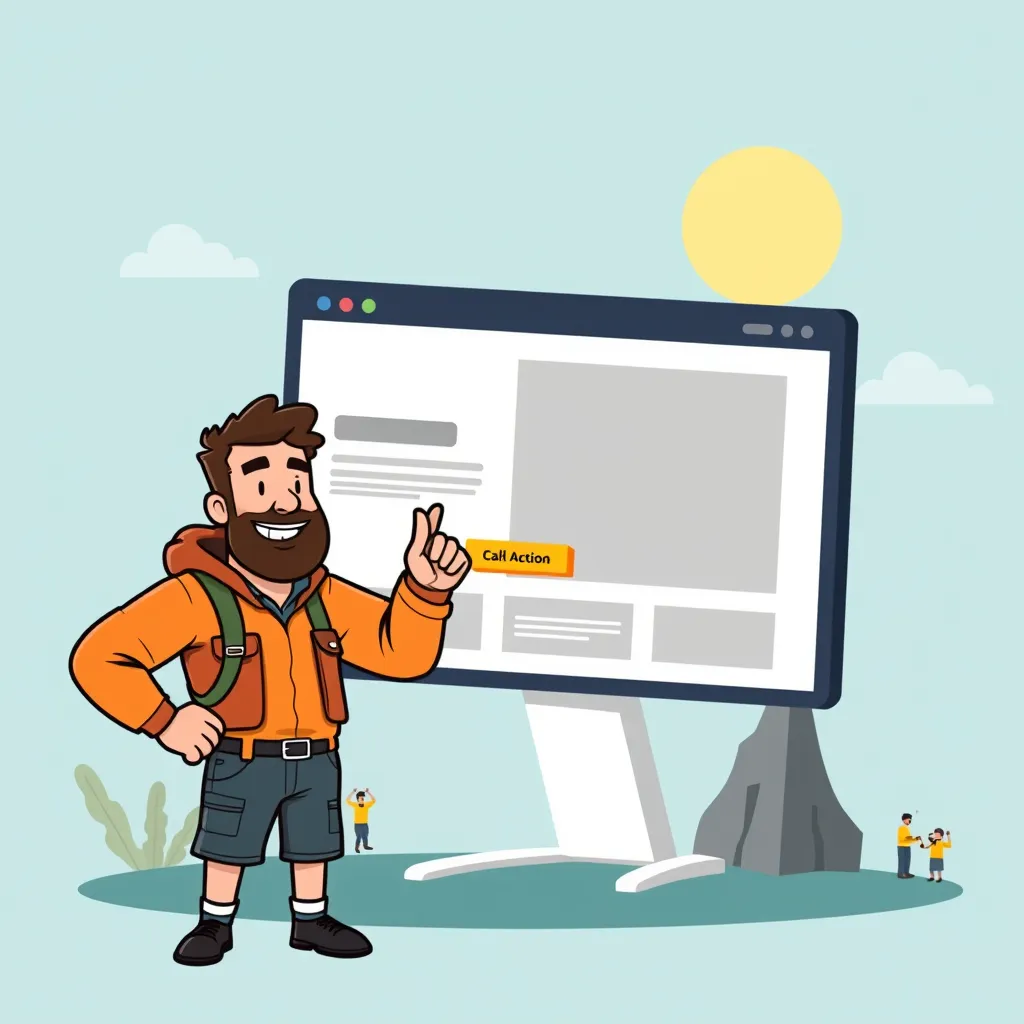
A beautiful website that doesn't guide people toward a next step is just a digital brochure. Every page should have a purpose, and visitors should always know what action they're meant to take. Whether that's booking a trip, exploring a product, signing up for a newsletter, or getting in touch the path forward needs to be clear and placed where people naturally look for it.
Buried CTAs, generic button copy like "Learn More," and pages that end without direction are all signs that a site was built without conversion in mind. A website redesign gives you the chance to fix that intentionally.
7. Your Design Looks Dated
Design trends move quickly, and what looked sharp in 2018 can feel stale now. This matters because design communicates trust. If your site looks outdated, visitors subconsciously assume your business might be too. For adventure and lifestyle brands where visual identity is part of the value, this gap between how great your product is and how your website represents it can be a real business problem.
Signs your design is behind: small fonts, heavy use of stock photography, dropdown menus everywhere, banner sliders, and a general lack of whitespace. Modern web design is clean, intentional, and fast.
8. You're Invisible in Search Results
A website redesign is not just a visual project. It's also a structural one. If your site was not built with SEO in mind from the beginning, it's likely missing foundational elements that help you rank in search results. This includes proper heading structure, optimized page speed, metadata, clean URL structures, internal linking, and mobile performance all of which Google uses to evaluate your site.
A well-built Webflow site, for example, gives you granular control over SEO settings on every page without needing a plugin to manage it. That kind of built-in precision makes a real difference over time.
9. Your Site Doesn't Reflect How Your Brand Has Evolved
Brands grow. Products change. Audiences shift. If your website was built three or more years ago and hasn't had a meaningful update since, there's a good chance it no longer accurately reflects who you are or what you offer. This misalignment between your actual brand and its online presence creates friction for new visitors who find you through social, ads, or word of mouth and land on something that feels disconnected from what they expected.
Strategic insight: One outdoor apparel brand we've seen this with had a product line that had grown from five SKUs to over fifty, but the website still had the structure of a five-product store. The navigation was a mess, collections were buried, and customers couldn't easily browse by activity or use case. A redesign with proper Shopify architecture solved the problem and significantly improved average session duration and conversion rate.
10. Your Site Doesn't Build Trust
Trust is built or broken in seconds online. Missing or outdated trust signals, unclear return or shipping policies, no reviews or testimonials, broken links, generic stock images, and contact pages that are hard to find all chip away at credibility. For adventure brands especially, where customers are making decisions about gear or experiences they're genuinely excited about, every doubt your website creates works against you.
Here's a quick checklist of trust signals your site should have:
- Real photography of your products, team, or experiences in action
- Customer reviews or testimonials that are specific and genuine
- A clear and easy-to-find contact page
- Transparent policies around shipping, returns, and privacy
- An SSL certificate (that padlock in the browser bar)
- Social proof in the form of press mentions, partnerships, or follower counts
- A consistent, professional design throughout every page
So, Do You Actually Need a Website Redesign?
If three or more of the above points felt uncomfortably familiar, the answer is probably yes. A website redesign is not about chasing trends or spending money on something visual. It's about making your biggest marketing asset actually work. For outdoor and adventure brands with real products to sell, real trips to book, or real communities to build, a website that underperforms has a measurable cost.
The platform decision matters too. If you're moving away from WordPress, Webflow is the right choice for brand-forward websites that need creative control and clean performance. For brands with ecommerce at the core, Shopify handled by people who understand outdoor and lifestyle markets is the better foundation. Our Webflow website development and Shopify website development services are built specifically for brands like yours.
If you're ready to figure out what your site actually needs, get in touch and we'll take a look together.
Frequently Asked Questions
How do I know if my website needs a full redesign or just some updates?
A good rule of thumb is to consider a full redesign if your site is more than three years old, was built on a platform that's holding you back, or has structural issues that can't be fixed with surface-level changes. If the problems are mostly cosmetic or content-related, targeted updates may be enough. A quick audit can usually answer this within an hour.
Why do you recommend Webflow over WordPress?
WordPress was built as a blogging platform and has been extended far beyond its original purpose. The result is a system that requires constant plugin updates, is vulnerable to security issues, and often produces slow, bloated sites. Webflow was built from scratch for modern web design. It produces cleaner code, performs better out of the box, and gives designers and marketers more control without the technical debt.
Can I use both Webflow and Shopify together?
Yes, and for many outdoor and lifestyle brands this is actually the ideal setup. Webflow handles your brand-forward marketing pages beautifully, while Shopify powers the commerce experience. The two platforms connect naturally, giving you the best of both worlds without compromise.
How long does a website redesign typically take?
Timelines vary depending on scope, but a well-scoped Webflow redesign for a brand site typically runs four to eight weeks. A Shopify build for an ecommerce brand can range from four to twelve weeks depending on the number of products, custom features, and integrations involved. Getting the strategy right upfront usually shortens the build phase significantly.
Will a website redesign actually improve my SEO?
Done correctly, yes. A redesign is an opportunity to fix foundational SEO issues, improve page speed, restructure content hierarchy, and build in proper metadata and internal linking from the start. The key is making sure SEO is part of the redesign process from day one, not bolted on at the end.

Founder, Jolly Web Consulting
Jolly Web Consulting is a Boulder, CO-based digital marketing agency helping outdoor and premium brands grow through SEO, Webflow, Shopify, paid ads, and email marketing. Since 2010, Hayden has built accessible, high-performing websites focused on traffic, conversion, and long-term customer growth.


