Email Marketing for Outdoor Brands: The Klaviyo Playbook
In Brief
If you're short on time, here's what matters most:
- Klaviyo is the right tool for outdoor and ecommerce brands because it connects directly to purchase behavior and site activity.
- Automated flows like welcome sequences, browse abandonment, and post-purchase series do the heavy lifting between campaigns.
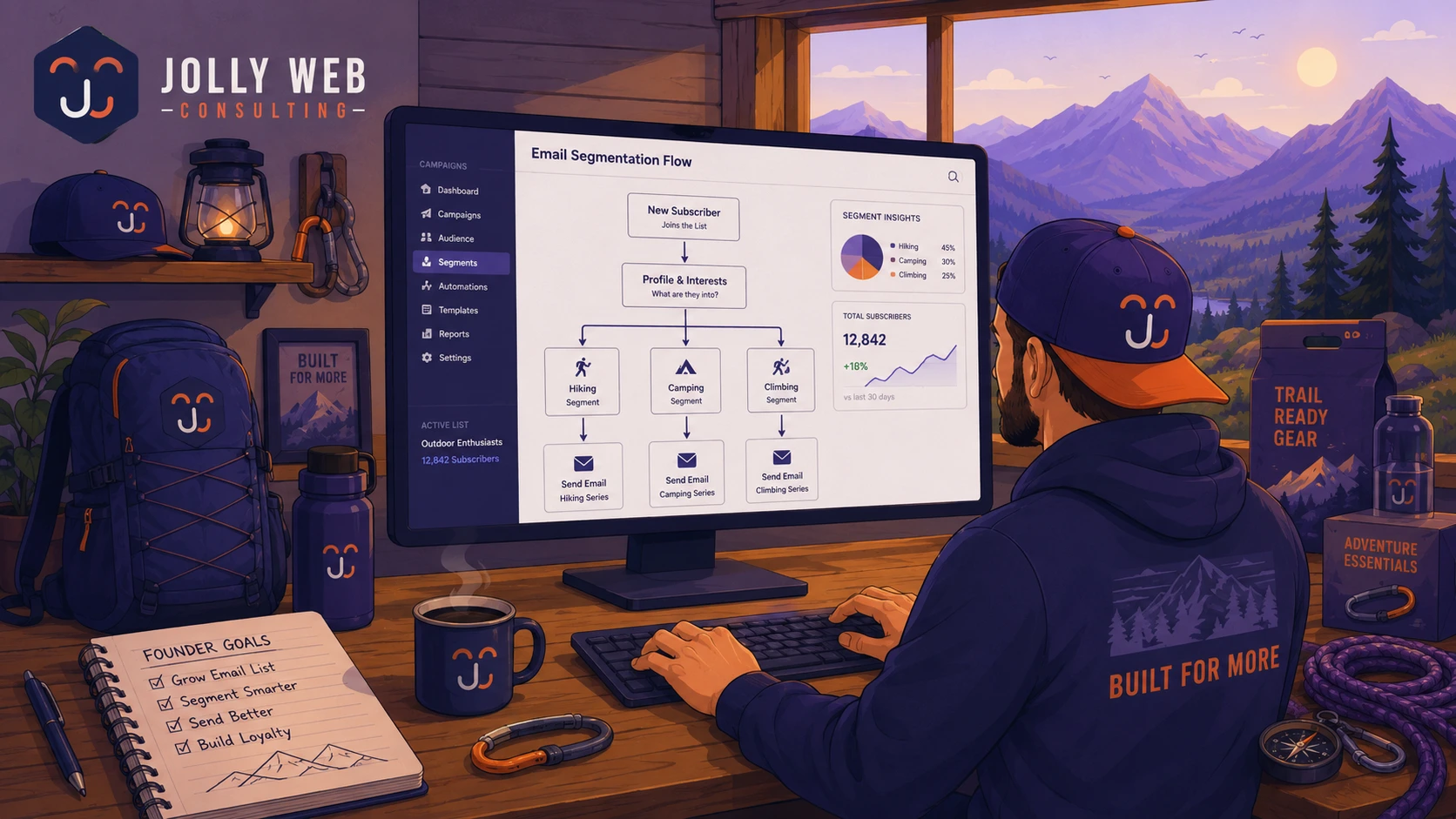
- Segmenting by activity type, purchase history, and engagement level makes every send more relevant and more profitable.
- A seasonal campaign calendar keeps your brand timely and your audience primed to buy at the right moments.
- The brands winning at email treat it as a content and relationship channel, not just a promotional one.
Most outdoor brands have a list. Few of them are actually using it. If your email strategy is a monthly newsletter and a Black Friday blast, you're leaving serious revenue on the table. Email marketing for outdoor brands has a unique advantage that most categories don't: your customers are already passionate about the thing you sell. They buy into the lifestyle, the mission, the gear. Done right, email becomes the channel that deepens that relationship and converts it into repeat purchases, not just one-time transactions.
Why Klaviyo Is Built for Outdoor Brands
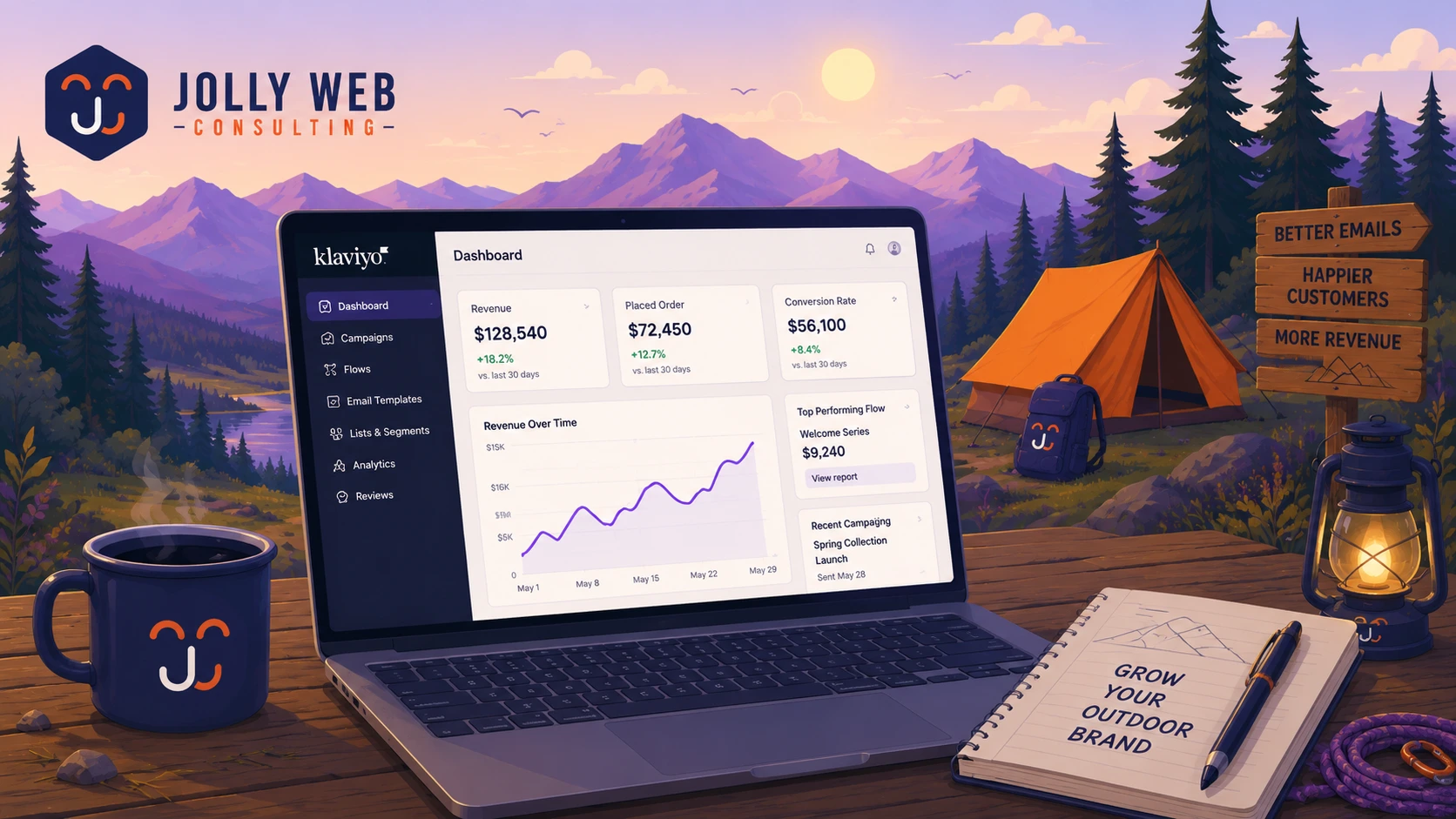
There are a lot of email platforms out there. Klaviyo is the one that makes the most sense for product-driven outdoor brands operating on Shopify or another ecommerce stack. The reason is data. Klaviyo pulls in real-time behavioral signals from your store, your website, and your email engagement, and lets you act on those signals automatically. Someone browsed your hiking boots three times and didn't buy? Klaviyo knows. A customer just made their fifth purchase in eighteen months? Klaviyo knows that too.
For outdoor brands, this matters because the customer journey is rarely linear. A trail runner might sign up for your list in January, browse in March, buy their first pair of shoes in May, and then go completely dark until fall. Klaviyo lets you build logic around that behavior rather than just blasting everyone the same message on the same schedule. That's the foundation of a real email program.
The Flows That Actually Drive Revenue
If campaigns are the voice of your brand, flows are the engine underneath it. Flows are automated sequences triggered by specific actions, and they do the work of converting, retaining, and re-engaging customers without requiring you to press send every time. Here are the flows every outdoor brand should have running:
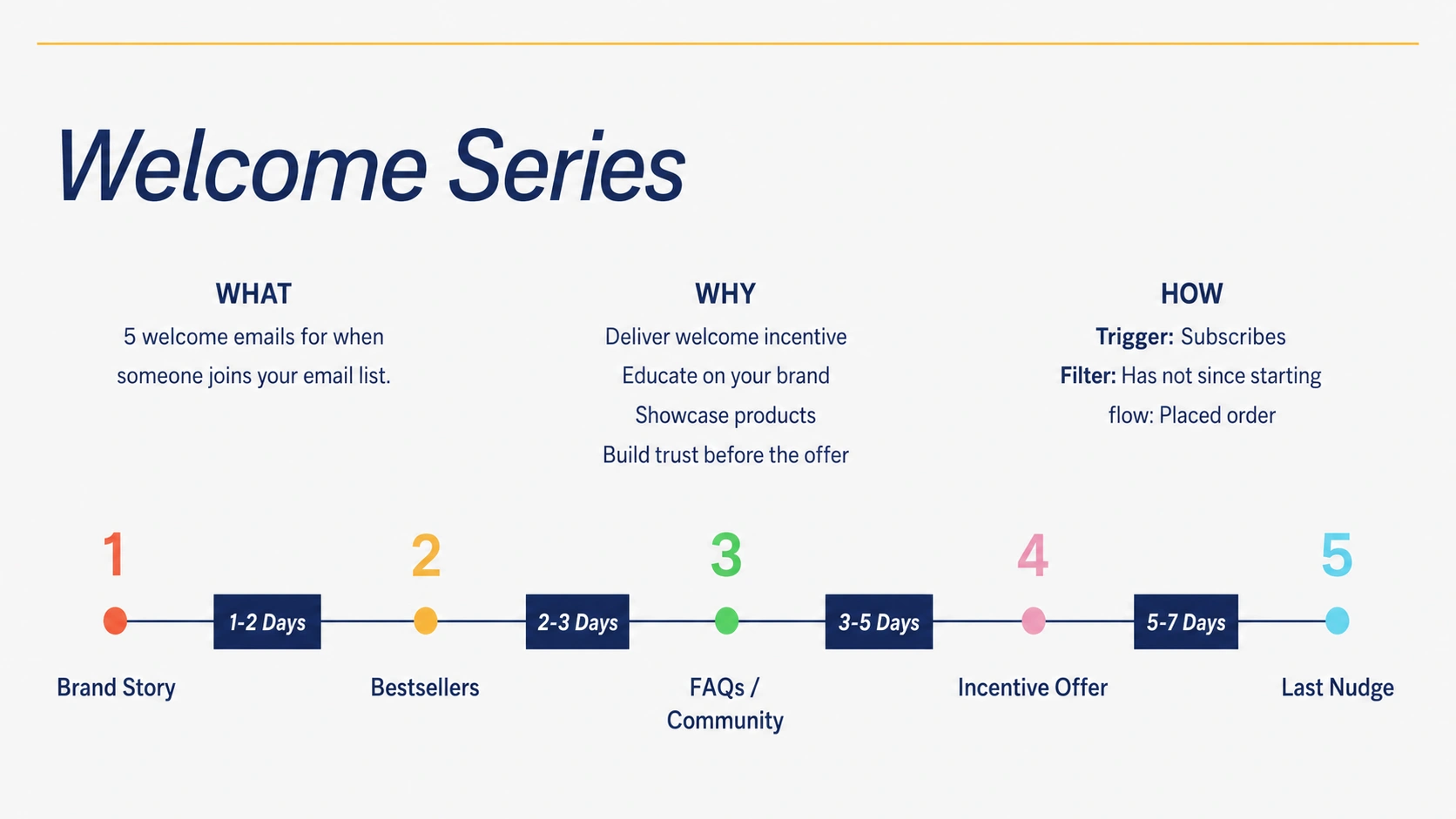
Welcome Series (5 emails)
This is your first real conversation with a new subscriber. Start by delivering the welcome incentive they signed up for, then use the rest of the sequence to build a stronger connection with the brand.
After one to two days, follow with a visually engaging email that introduces your brand values. The third email can share testimonials, customer content or social proof. From there, tell the story behind the business and introduce the founders, before finishing with a featured collaboration, collection or brand partnership.
This sequence gives subscribers an immediate reason to engage while gradually helping them understand what makes the brand different.
Abandoned Cart and Checkout Flow (up to 7 emails)
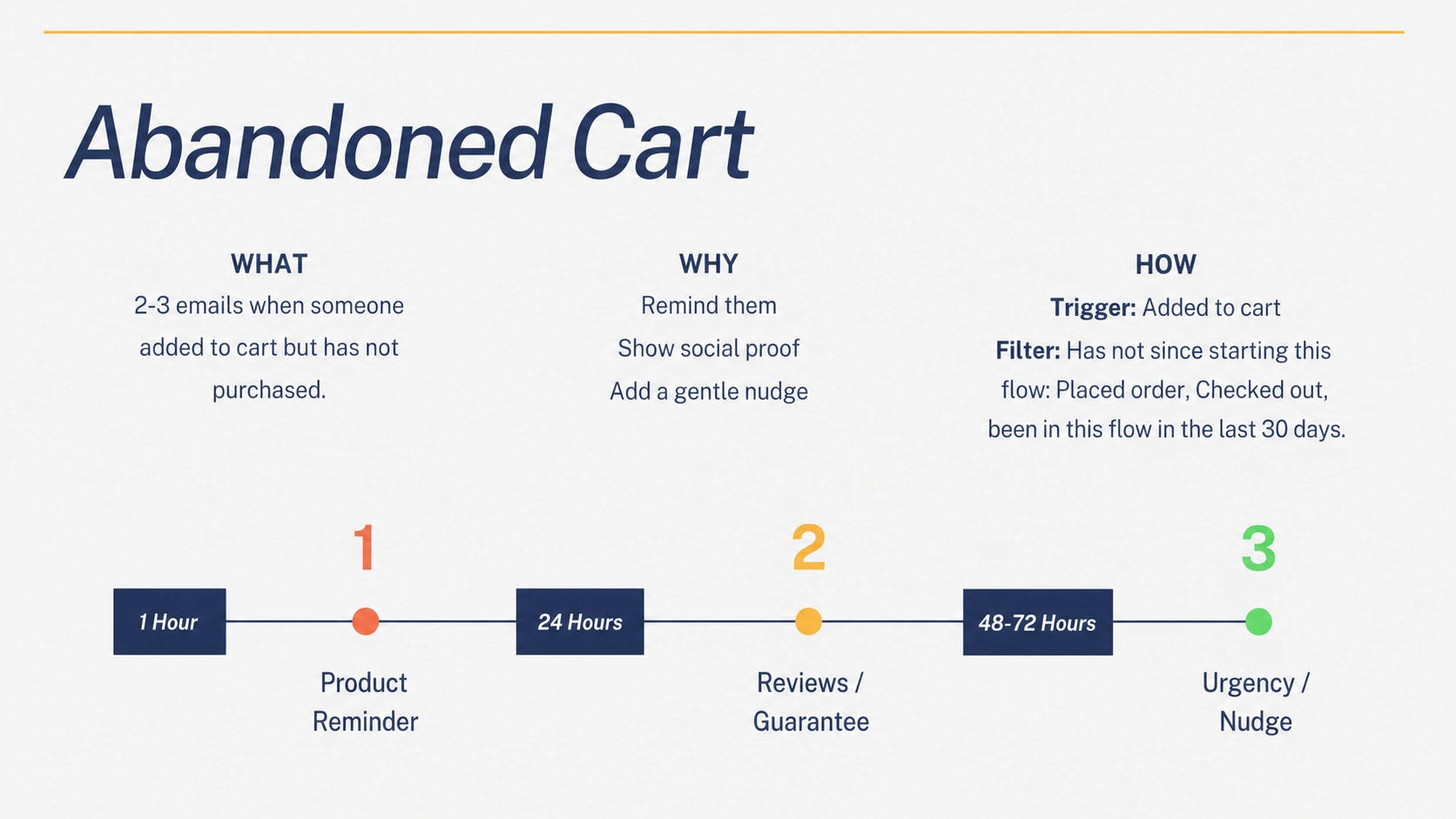
This flow is for people who have added a product to their cart or started checking out without completing their purchase.
Send the first product reminder around 20 minutes after abandonment while the item is still fresh in their mind. Over the following days, use the sequence to answer questions and gradually strengthen the case for purchasing.
The next emails can include a message from the founder, frequently asked questions, key product benefits, testimonials, social proof and a sense of urgency. Space these emails approximately one to two days apart so that the reminders remain consistent without becoming overwhelming.
Towards the end of the flow, tailor the message according to the customer. Previous purchasers can receive a final reminder offering help or support. New customers can be shown an exclusive discount, followed by a final-chance reminder one to two days later.
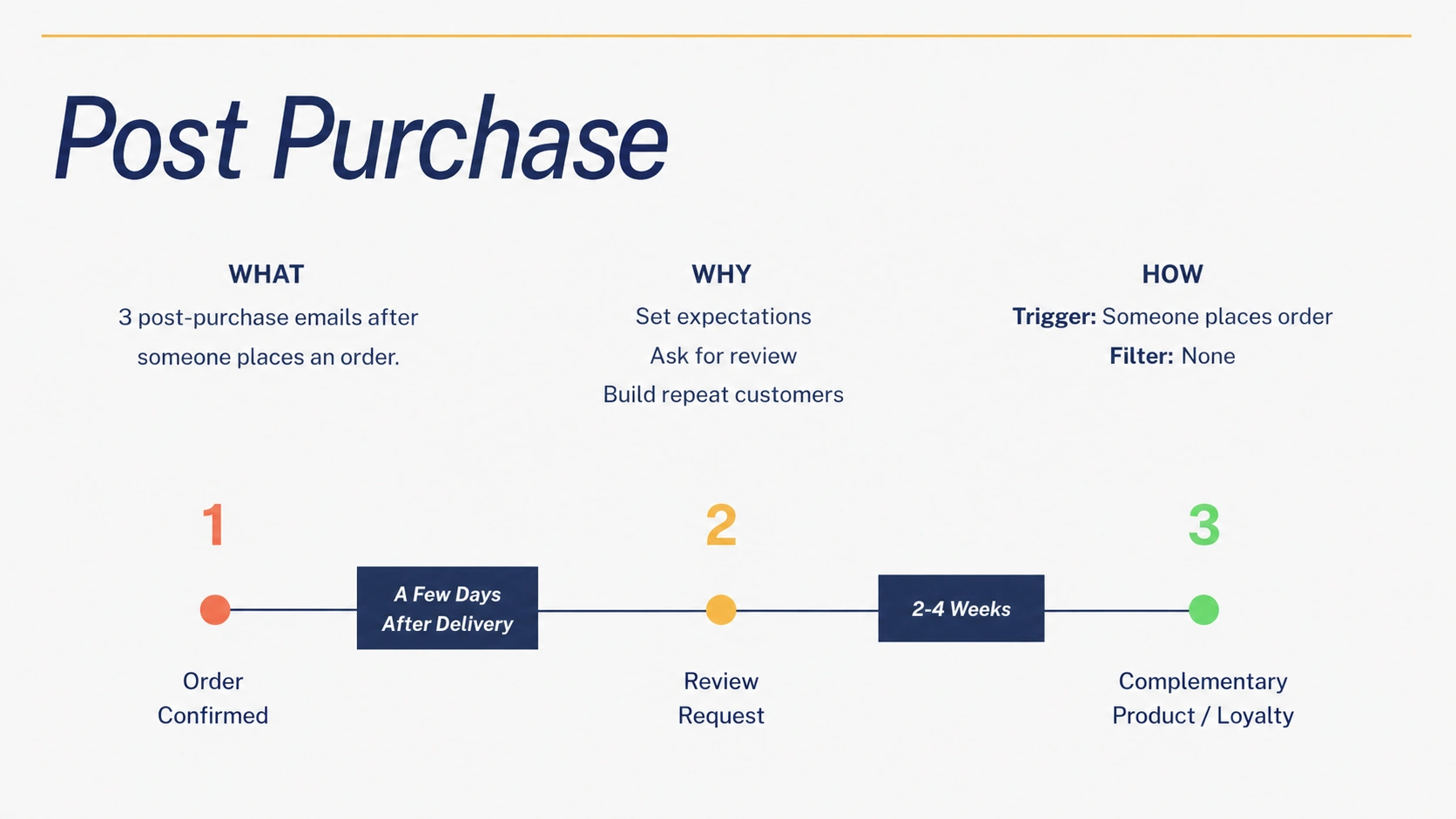
Post-Purchase Series (4+ emails)
The post-purchase flow is one of the most underused opportunities for building loyalty and encouraging repeat purchases.
Start with a thank-you email immediately after the customer places their order. Alongside showing appreciation, you can lightly introduce a relevant complementary product without distracting from the purchase they have just made.
After one to two days, invite the customer to leave a review. Five days later, follow up with an incentive or discount in exchange for their feedback. A final reminder can be sent two days later, making it clear that the review incentive is about to end.
This flow helps generate more reviews, strengthens the customer relationship and creates a natural opportunity for a future purchase.
Win-Back Flow (2 to 3 emails)
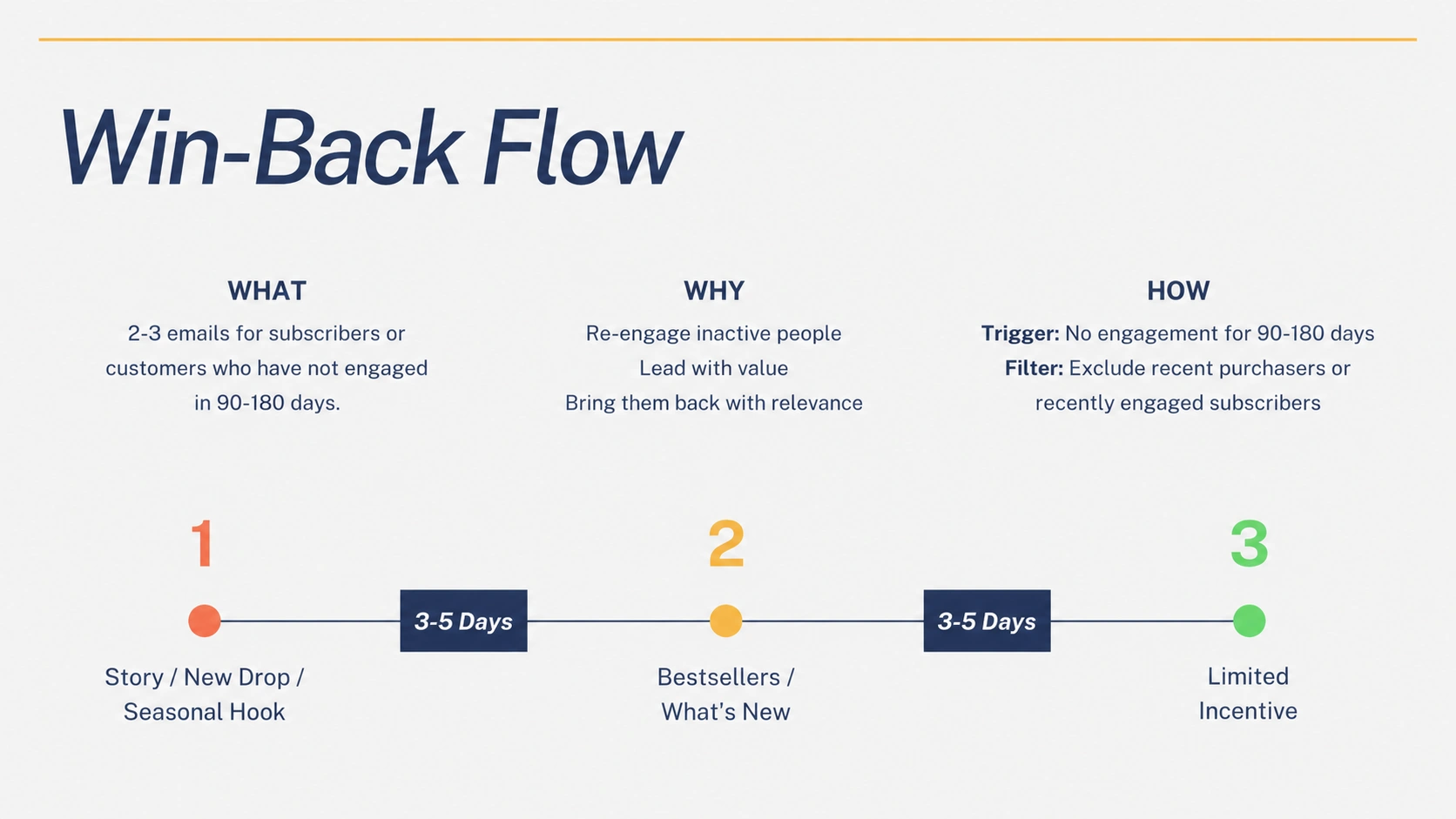
Use a win-back flow for subscribers or customers who have not engaged with the brand for around 90 to 180 days.
Lead with value rather than guilt. A compelling customer story, new product launch, seasonal collection or useful piece of content can give people a genuine reason to return.
A second email can highlight bestselling products or recent developments, while the final message may introduce a limited incentive. The goal is to re-engage people who still have potential interest before removing consistently inactive subscribers from regular campaigns.
Segmentation That Makes Sense for Outdoor Audiences
Generic segmentation like "active subscribers" versus "inactive subscribers" is a starting point, not a strategy. Outdoor brand audiences have real dimension, and Klaviyo lets you slice your list in ways that actually reflect how people buy and engage.
Think about segmenting by activity category. If you sell across running, hiking, climbing, and cycling, your messaging should reflect those distinct identities. A trail runner and a backcountry climber are both your customers, but they care about different things and buy on different timelines. If your product catalog supports it, build segments around category purchase history and tailor your flows and campaigns accordingly.
Segmenting by purchase frequency is also worth doing. One-time buyers need a different message than someone who has bought three or four times. Your VIP segment, people who buy consistently and spend above average, should get early access, exclusive content, and a sense of being known. That treatment costs you almost nothing and pays back in loyalty.
Finally, don't overlook geographic segmentation. An outdoor brand with a national or global audience can do a lot with location data. If you're running a Whistler-specific campaign or promoting gear relevant to desert climates in the Southwest, you can keep those sends targeted and relevant rather than blasting everyone.
A Seasonal Campaign Calendar for Outdoor Brands
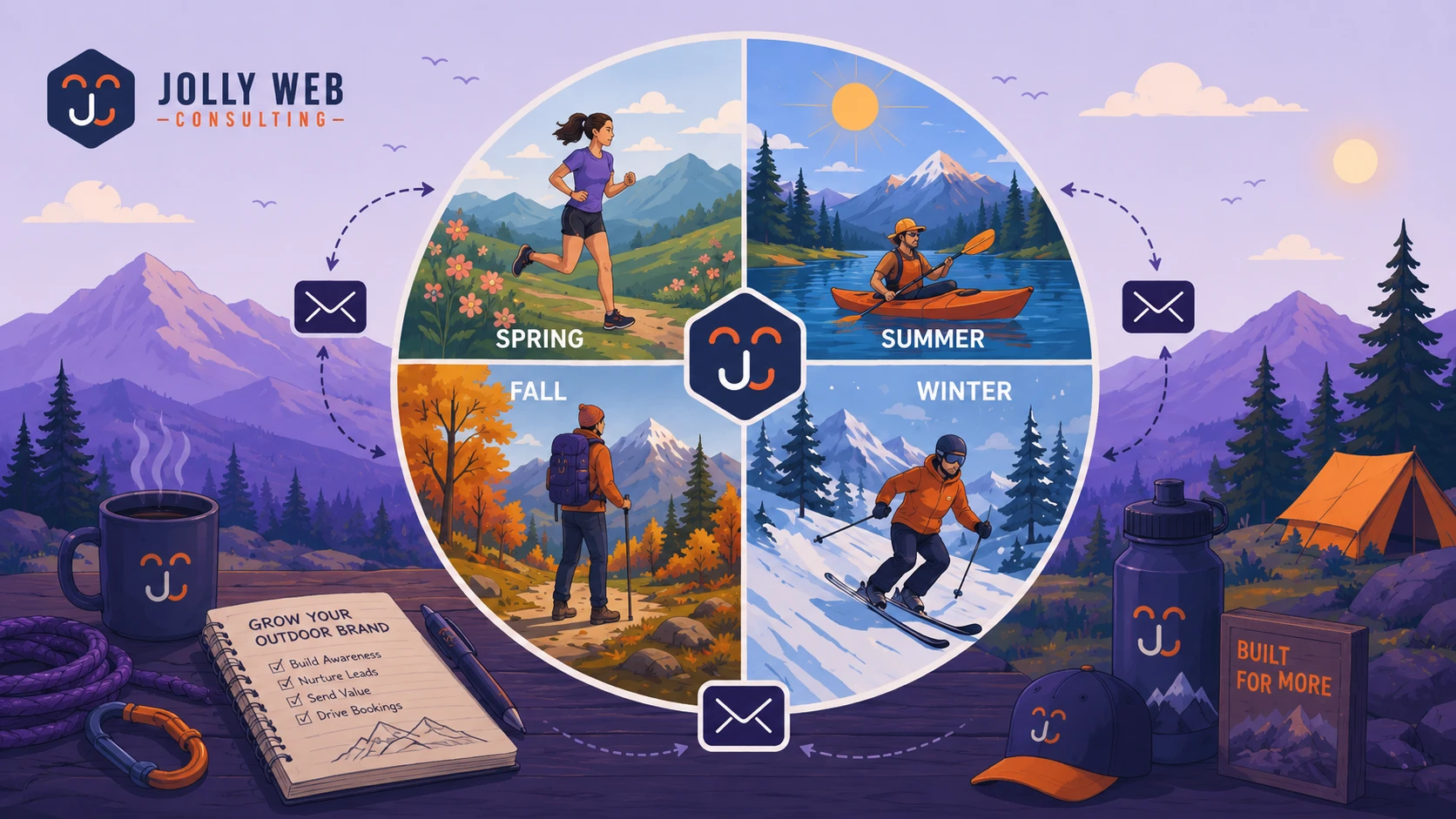
Email marketing for outdoor brands lives and dies by timing. Your audience's buying behavior follows the seasons, the gear calendar, and the moments when they're planning their next adventure. Here's how to think about the year:
January and February are planning months. People are setting goals, booking trips, and thinking about what gear they need for spring. This is the time to publish editorial-style content in your emails, gear guides, destination features, and training tips, alongside products that support early-season goals.
March and April are pre-season buildup. Launches, collections, and early access campaigns work well here. If you have a spring line, this is when you tease and release it. Hype the upcoming season with content that gets people excited to get outside.
May through August is peak season. Your customers are active, spending, and engaged. Keep your sends consistent but not overwhelming. Two to three campaigns per month with strong product focus, real-world use content, and community-driven storytelling. This is also when UGC and ambassador content can do a lot of work in your emails.
September and October are transition months. Fall gear, shoulder-season adventures, and early winter planning all work here. This is also a good time to run re-engagement campaigns before the holiday stretch.
November and December are promotional months. Black Friday, Cyber Monday, and holiday gifting are table stakes, but the brands that stand out add storytelling and mission-driven messaging to their promotional sends. A gift guide with genuine curation and a story behind it hits differently than a generic discount email.
A Real-World Example: The Post-Purchase Play
Consider an outdoor apparel brand that sells primarily through their Shopify store. They have solid acquisition numbers but a low repeat purchase rate, around 18 percent. After building out a three-email post-purchase flow in Klaviyo, with email one focused on what to expect, email two asking for a review and offering care tips for the product, and email three introducing their most-loved complementary items, their repeat purchase rate climbed to 27 percent within two quarters.
That's not from a new acquisition campaign or a discount strategy. It's from showing up in the right place at the right time with the right message. Post-purchase is where most outdoor brands are quietest, and it's often the highest-leverage place to invest your email effort.
A Few Campaign Practices Worth Keeping
Beyond flows and segmentation, the quality of your regular campaign emails matters. A few things that tend to work well for outdoor brands: lead with imagery that earns attention, write subject lines that reflect how your audience actually talks, keep copy tight and purposeful, and always have a clear single action you want the reader to take. Avoid the trap of trying to cover five things in one email. Pick one story, one product, one moment, and do it well.
Plain text emails also perform better than most brands expect. A personal-sounding email from the founder or a team member, written in plain text and referencing something real and timely, can generate more replies and engagement than a beautifully designed template. Mix both formats in your calendar.
Frequently Asked Questions
How often should an outdoor brand be sending emails?
Most outdoor brands do well with two to four campaign emails per month, depending on how active your calendar is. The key is consistency over volume. Sending once a week with strong content and relevance is better than sending four times a week with filler. Your flows run independently of this cadence, so your total email touchpoints will be higher than your campaign count.
What should outdoor brands avoid in their email marketing?
The biggest mistake is treating email as purely a promotional channel. If every email is a sale, your list will tune out and your open rates will slide. The outdoor audience responds to content, community, and authenticity. Mix in stories, useful information, and product education alongside your promotional sends.
How do I grow an email list as an outdoor brand?
Pop-ups on your website with a genuine value offer, usually a discount or exclusive content, are still the most effective list growth tool for ecommerce. Giveaway collaborations with complementary brands, social media lead campaigns, and in-person events like demo days or races can also drive high-quality signups. Quality of subscribers matters more than raw volume.
Does Klaviyo work well with Shopify?
Klaviyo and Shopify are one of the best-integrated pairings in ecommerce. The native integration syncs customer data, order history, and browsing behavior automatically, which is what makes Klaviyo's segmentation and flow triggers so powerful for product-based brands. If you're on Shopify, Klaviyo is almost always the right email platform to use.
When should an outdoor brand bring in help for their email program?
If your flows aren't built yet, your list is growing but your revenue per subscriber is flat, or you're spending more time on email than the results justify, it's time to bring in a specialist. A well-built Klaviyo program should be largely self-sustaining with occasional optimization. If it's feeling like a constant grind, the infrastructure probably needs work.
Ready to Build an Email Program That Actually Works?
Email marketing for outdoor brands isn't complicated, but it does require intention. The right flows, a smart segmentation strategy, and a campaign calendar built around how your audience actually lives and buys will put you ahead of most brands in your category. If you're ready to build a Klaviyo program that does what it's supposed to do, take a look at how we approach email marketing or get in touch and let's talk through where to start.

Founder, Jolly Web Consulting
Jolly Web Consulting is a Boulder, CO-based digital marketing agency helping outdoor and premium brands grow through SEO, Webflow, Shopify, paid ads, and email marketing. Since 2010, Hayden has built accessible, high-performing websites focused on traffic, conversion, and long-term customer growth.


